How Can a Period Underwear Manufacturer Support OEM Projects?
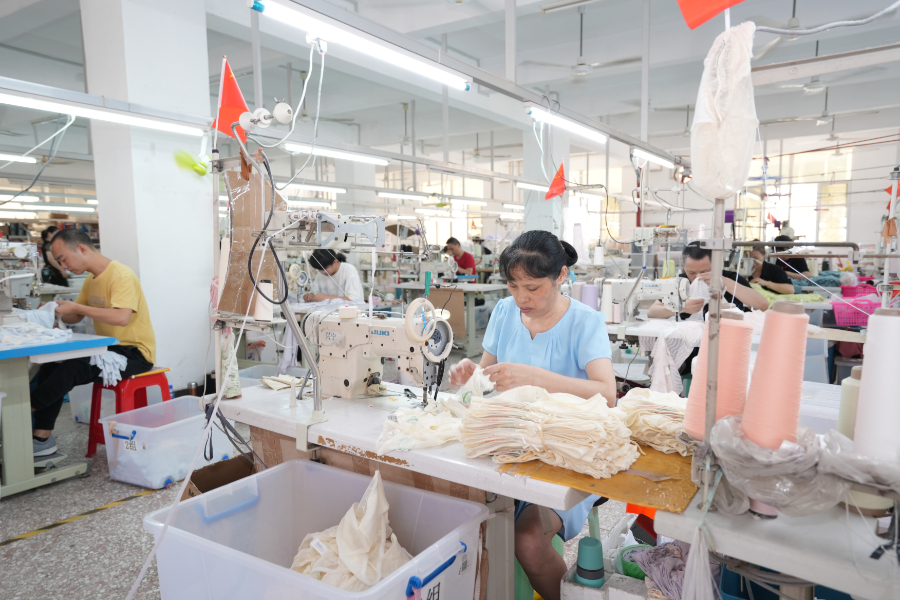
An OEM period underwear manufacturer should support more than sewing. A workable program usually covers fabric sourcing, multilayer gusset development, pattern grading, absorbency testing, wash durability, labeling, packaging, inspection, and repeat-order control. A single style offered in 6 sizes and 4 colors already creates 24 SKUs, while 3 absorbency levels raise that figure to 72. Material changes also affect fit: a shell fabric with 20% more stretch may require pattern and elastic adjustments before bulk production. Manufacturers that document specifications, test finished garments, control material lots, and maintain approved samples give brands a more stable route from prototype to retail production.
OEM work normally starts with the buyer's tech pack, reference garment, measurement chart, or design drawing. The factory then checks whether the requested shape can be made with the selected fabrics, elastics, seam types, and absorbent structure without creating excessive thickness or inconsistent fit.
A period brief may contain 3 to 5 functional layers in the gusset while the body fabric may contain 10% to 25% elastane. Those materials do not stretch, shrink, or recover at the same rate, so a pattern made for ordinary underwear cannot simply receive an absorbent pad and go straight into production.
A 5 mm change in gusset width can affect edge coverage, seam placement, comfort, and the amount of absorbent material used across thousands of garments.
That construction work leads directly to material selection. A manufacturer may compare a 160–190 GSM body fabric for lighter everyday products with fabrics above 200 GSM when the brand wants firmer coverage, while the inner layer must remain soft enough for prolonged skin contact.
The absorbent package needs separate specifications rather than one general description such as "heavy flow." A brand may request 10–15 mL for light backup use, 20–30 mL for moderate use, or 35–50 mL and above for higher-capacity designs, but laboratory capacity and performance during wear are not the same measurement.
Compression from sitting or movement can release liquid from an absorbent textile that performs well when tested without pressure. For that reason, development should examine uptake speed, spreading, retention, barrier integrity, and rewet rather than reporting only one milliliter figure.
| Product area | Useful OEM specification |
|---|---|
| Body fabric | GSM, fiber content, stretch %, recovery, shrinkage |
| Top layer | Moisture transfer, softness, drying rate |
| Absorbent layer | Capacity in mL, thickness, retention |
| Barrier | Hydrostatic resistance, flexibility, wash durability |
| Elastic | Width, elongation %, recovery |
| Finished garment | Measurements, tolerances, wash change |
Once the material package is chosen, sampling becomes the next production filter. A normal OEM program may require 3 to 5 sample rounds: development sample, fit sample, revised functional sample, size set, and pre-production sample.
A size set is especially useful when a style runs from XS to 3XL or beyond. Eight sizes combined with 5 colors create 40 SKU combinations, and proportional grading alone may leave larger sizes with a gusset that is too narrow or smaller sizes with excess material around the leg opening.
Pattern teams therefore grade the waist, hip, rise, leg opening, gusset width, and gusset length separately. Elastic length also needs control because a waistband cut 3% shorter can noticeably change pressure and fit even when the fabric pattern remains unchanged.
That fit work should be followed by controlled laundering. ISO 6330:2021 specifies domestic washing and drying procedures for textile testing and includes 16 washing procedures for Type A machines, 12 for Type B, 7 for Type C, and 6 drying procedures.
AATCC also maintains methods for checking dimensional change after home laundering, including TM135 for fabrics and TM150 for garments. A brand can use repeated wash cycles to compare shrinkage, delamination, seam condition, elastic recovery, and absorbency before authorizing bulk production.
A garment that measures correctly before washing but loses 5% in width after repeated laundering can fit very differently from the approved sample.
Testing should also cover the barrier layer. AATCC TM127 is an established method for evaluating textile resistance to water under hydrostatic pressure, making it relevant when a buyer wants a defined method for comparing waterproof constructions rather than relying on hand pouring tests.
Material compliance needs the same documentation discipline. Period underwear remains in prolonged contact with the body, so brands often ask suppliers for restricted-substance reports, fiber composition records, supplier declarations, and certification information covering dyes, finishes, membranes, and accessories.
OEKO-TEX STANDARD 100, for example, evaluates textile products for harmful substances, while buyers may add their own requirements for PFAS, formaldehyde, certain azo colorants, heavy metals, or phthalates depending on the sales market and product specification. A 2026 program should define those requirements before material purchasing rather than after 10,000 garments have been made.
Factories also need lot control because one approved laboratory report does not automatically cover every later material batch. Bulk fabric should be matched to supplier codes, dye lots, purchase records, and inspection reports so a quality issue can be narrowed to a specific shipment instead of an entire product line.
Commercial planning follows the technical approval stage. A factory may accept an order of 1,000 pieces, yet the fabric mill, custom elastic supplier, or packaging printer can each impose a different minimum order quantity.
Consider a style with 4 colors and 6 sizes. A 2,400-piece order averages only 100 units per size-color combination before the size ratio is adjusted, while a custom waistband supplier asking for several thousand meters may already exceed the needs of that first order.
A manufacturer can reduce unnecessary inventory by offering stock fabrics, shared colors, standard elastics, common labels, or existing packaging dimensions during the first production run. Custom dyeing, logo jacquards, printed waistbands, and molded trims can be introduced later when annual volume supports larger component commitments.
For brands working with suppliers such as Ljvogues, the useful discussion is not simply "What is your MOQ?" but "What is the MOQ for each fabric, color, elastic, label, and packaging component?" That question produces a more accurate cost and inventory picture.
Costing should then be broken into material consumption and operations. Period underwear often uses more components and sewing steps than standard briefs, so a small change in gusset length, waistband type, seam construction, or packaging can alter the unit cost across a 20,000-piece order.
If a 6-cent construction change is applied to 20,000 garments, the difference is $1,200. If the change reduces barrier coverage or absorbent area, however, the saving may not justify a higher complaint or return rate, so cost review should separate decorative features from performance-related construction.
Production planning begins once the pre-production sample, measurements, colors, labels, and packaging are approved. The factory schedules fabric preparation, cutting, gusset assembly, sewing or bonding, finishing, inspection, packing, and carton preparation around the availability of each material.
The garment sewing stage may take only part of the total lead time. Custom knitting, dyeing, lamination, printing, or branded elastic can add several weeks, so a quoted 30-day sewing period should never be treated as a 30-day complete order cycle.
Quality control needs checkpoints before the final carton is closed. Incoming fabric can be checked for width, GSM, shade, stretch, visible defects, and shrinkage; production teams can inspect seam allowance, gusset position, elastic tension, skipped stitches, and barrier damage while sewing is still underway.
Final inspection can use acceptance sampling rather than checking every piece. ISO 2859-1:2026 provides sampling schemes indexed by Acceptance Quality Limit for lot-by-lot inspection, giving manufacturers and buyers a recognized framework for deciding sample sizes and acceptance rules.
Functional defects should not be treated like minor appearance differences. A slightly uneven label position may have little effect on use, while a punctured barrier, incomplete gusset seam, incorrect absorbent layer, or missing size label can require a different defect classification in the buyer's inspection standard.
Repeat orders introduce another issue: version control. A factory may be holding patterns from 2024, revised measurements from 2025, and a new gusset specification approved in 2026, so every production file needs a revision number and approval date.
The controlled file should include the pattern, graded measurements, bill of materials, color reference, sewing instructions, approved sample, label artwork, packaging layout, test requirements, and inspection tolerances. Without that record, a repeat order can reproduce an older construction even when the previous shipment was correct.
Capacity should also be checked against the buyer's sales plan. A brand moving from 3,000 pieces per order to 30,000 pieces may need more sewing lines, automated cutting, larger material reservations, additional inspectors, and earlier component purchasing.
A manufacturer that can show monthly line capacity, sample capacity, material lead times, inspection staffing, and historical on-time production data gives the buyer numbers that can be compared against forecast demand. If planned volume rises by 200%, the production plan should show where the additional capacity will come from before purchase orders are released.