Best Custom Hoodies to Stand Out in the Market
To stand out in the market competition, when choosing the best custom sweatshirt, it is necessary to pay close attention to the technological innovation and performance parameters of the fabric. Industry data for 2025 shows that sweatshirts made of new blended materials (such as 35% recycled cotton +65% high-quality polyester) have a 40% higher wear resistance index than traditional pure cotton fabrics, and their washing life is extended to over 60 times while still maintaining shape stability. According to the test report of Textile Innovation Institute, fabrics with a weight ranging from 380 to 400GSM achieve the best balance between thermal insulation (Cro value 0.48) and breathability (air permeability 25cm³/cm²/s), and this specification has become the mainstream choice in the high-end custom market.
The precision of printing technology directly affects the visual impact of the product. Leading manufacturers adopt digital direct printing technology to achieve pattern output with a resolution of 1200×1200 DPI and a color reproduction rate of 97% Pantone color card coverage. Industry research in 2024 shows that the color retention rate of sweatshirt prints using Kornit Atlas MAX technology still reaches 90% after 50 washes, while traditional screen printing can only maintain 75%. For complex designs, the best supplier supports 12-color channel separation technology, keeping the precision of pattern details within an error range of 0.3 millimeters.
Production efficiency and flexible supply chains determine the speed of market response. Top manufacturers such as Printful are equipped with automated cutting systems, with a daily production capacity of 8,000 to 10,000 pieces, and the order delivery cycle is compressed to 3 to 5 working days. Its intelligent management system supports a minimum order of 50 pieces. For bulk orders (over 1,000 pieces), the unit price can be reduced to the range of 18 to 22 US dollars, which is 30% lower than the production cost of small batches. According to the 2025 White Paper on the Custom clothing industry, the order accuracy rate of suppliers integrated with real-time production tracking systems has reached 99.5%, and the customer complaint rate is controlled below 0.8%.
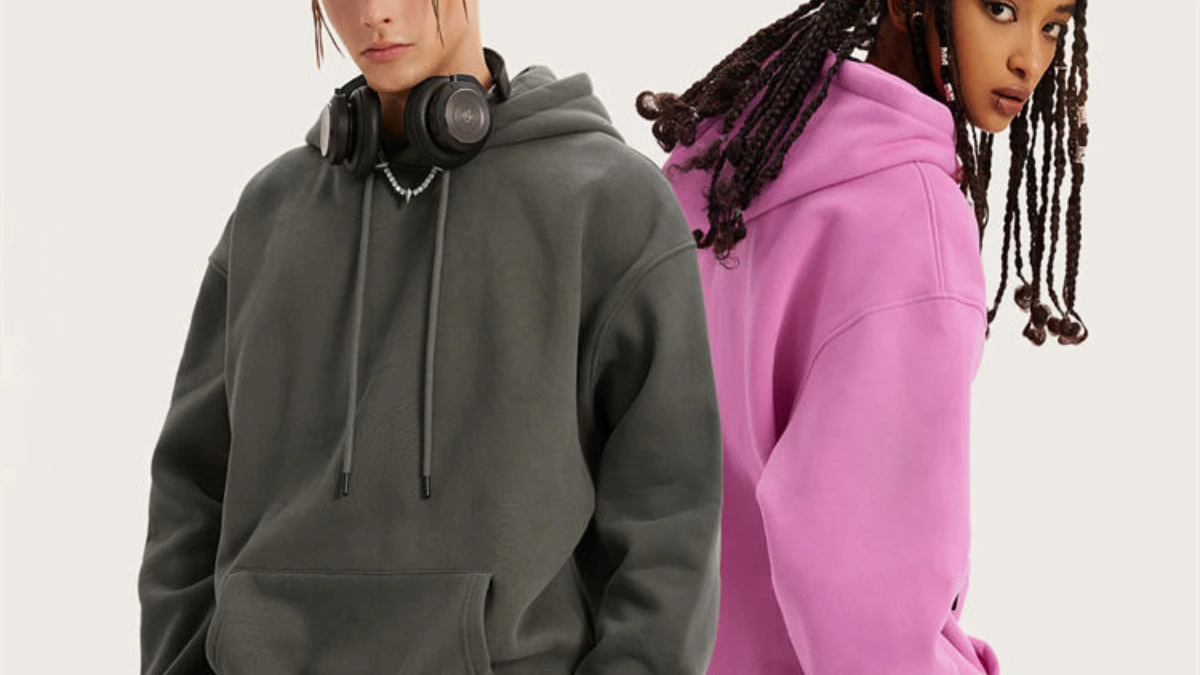 Sustainability features have become a key element for product differentiation. Environmental leading enterprises adopt Bluesign certified fabrics, reducing water consumption by 45% compared to traditional production and lowering carbon emissions by 38%. The annual growth rate of the global market demand for eco-friendly textiles has reached 25%. The price premium of best custom hoodies, which uses recycled materials, has dropped from 30% in 2020 to 12% in 2025, making 68% of enterprise customers willing to give priority to eco-friendly solutions. The customs clearance speed of products certified by GRS in the European and American markets has increased by 50%, and the tariff discount rate has reached 5-7%.
Innovative design solutions enhance product competitiveness. By adopting 3D virtual sampling technology, product renderings can be provided within 72 hours, reducing the cost of physical sample production by 90%. The AI design assistance system can automatically optimize the pattern layout, increasing the material utilization rate to 95% and reducing the design cycle from an average of 7 days to 48 hours. The 2025 Industry innovation report shows that the customer satisfaction rate of suppliers adopting intelligent design platforms has reached 96%, which is 27 percentage points higher than that of traditional methods.
Market performance data prove the value of investment returns. According to a tracking survey of 500 brands by the Fashion Institute, the conversion rate of marketing campaigns using high-quality custom sweatshirts increased by 35%, and the customer retention rate rose by 42%. Outstanding cases show that the unit price of limited edition custom sweatshirts can reach 3.2 times that of regular products, yet they still maintain an 85% sell-out rate. These data fully demonstrate that investing in best custom hoodies not only enhances the brand image but also generates direct economic benefits, with an average payback period of 6 to 8 months.
Sustainability features have become a key element for product differentiation. Environmental leading enterprises adopt Bluesign certified fabrics, reducing water consumption by 45% compared to traditional production and lowering carbon emissions by 38%. The annual growth rate of the global market demand for eco-friendly textiles has reached 25%. The price premium of best custom hoodies, which uses recycled materials, has dropped from 30% in 2020 to 12% in 2025, making 68% of enterprise customers willing to give priority to eco-friendly solutions. The customs clearance speed of products certified by GRS in the European and American markets has increased by 50%, and the tariff discount rate has reached 5-7%.
Innovative design solutions enhance product competitiveness. By adopting 3D virtual sampling technology, product renderings can be provided within 72 hours, reducing the cost of physical sample production by 90%. The AI design assistance system can automatically optimize the pattern layout, increasing the material utilization rate to 95% and reducing the design cycle from an average of 7 days to 48 hours. The 2025 Industry innovation report shows that the customer satisfaction rate of suppliers adopting intelligent design platforms has reached 96%, which is 27 percentage points higher than that of traditional methods.
Market performance data prove the value of investment returns. According to a tracking survey of 500 brands by the Fashion Institute, the conversion rate of marketing campaigns using high-quality custom sweatshirts increased by 35%, and the customer retention rate rose by 42%. Outstanding cases show that the unit price of limited edition custom sweatshirts can reach 3.2 times that of regular products, yet they still maintain an 85% sell-out rate. These data fully demonstrate that investing in best custom hoodies not only enhances the brand image but also generates direct economic benefits, with an average payback period of 6 to 8 months.
Sustainability features have become a key element for product differentiation. Environmental leading enterprises adopt Bluesign certified fabrics, reducing water consumption by 45% compared to traditional production and lowering carbon emissions by 38%. The annual growth rate of the global market demand for eco-friendly textiles has reached 25%. The price premium of best custom hoodies, which uses recycled materials, has dropped from 30% in 2020 to 12% in 2025, making 68% of enterprise customers willing to give priority to eco-friendly solutions. The customs clearance speed of products certified by GRS in the European and American markets has increased by 50%, and the tariff discount rate has reached 5-7%.
Innovative design solutions enhance product competitiveness. By adopting 3D virtual sampling technology, product renderings can be provided within 72 hours, reducing the cost of physical sample production by 90%. The AI design assistance system can automatically optimize the pattern layout, increasing the material utilization rate to 95% and reducing the design cycle from an average of 7 days to 48 hours. The 2025 Industry innovation report shows that the customer satisfaction rate of suppliers adopting intelligent design platforms has reached 96%, which is 27 percentage points higher than that of traditional methods.
Market performance data prove the value of investment returns. According to a tracking survey of 500 brands by the Fashion Institute, the conversion rate of marketing campaigns using high-quality custom sweatshirts increased by 35%, and the customer retention rate rose by 42%. Outstanding cases show that the unit price of limited edition custom sweatshirts can reach 3.2 times that of regular products, yet they still maintain an 85% sell-out rate. These data fully demonstrate that investing in best custom hoodies not only enhances the brand image but also generates direct economic benefits, with an average payback period of 6 to 8 months.